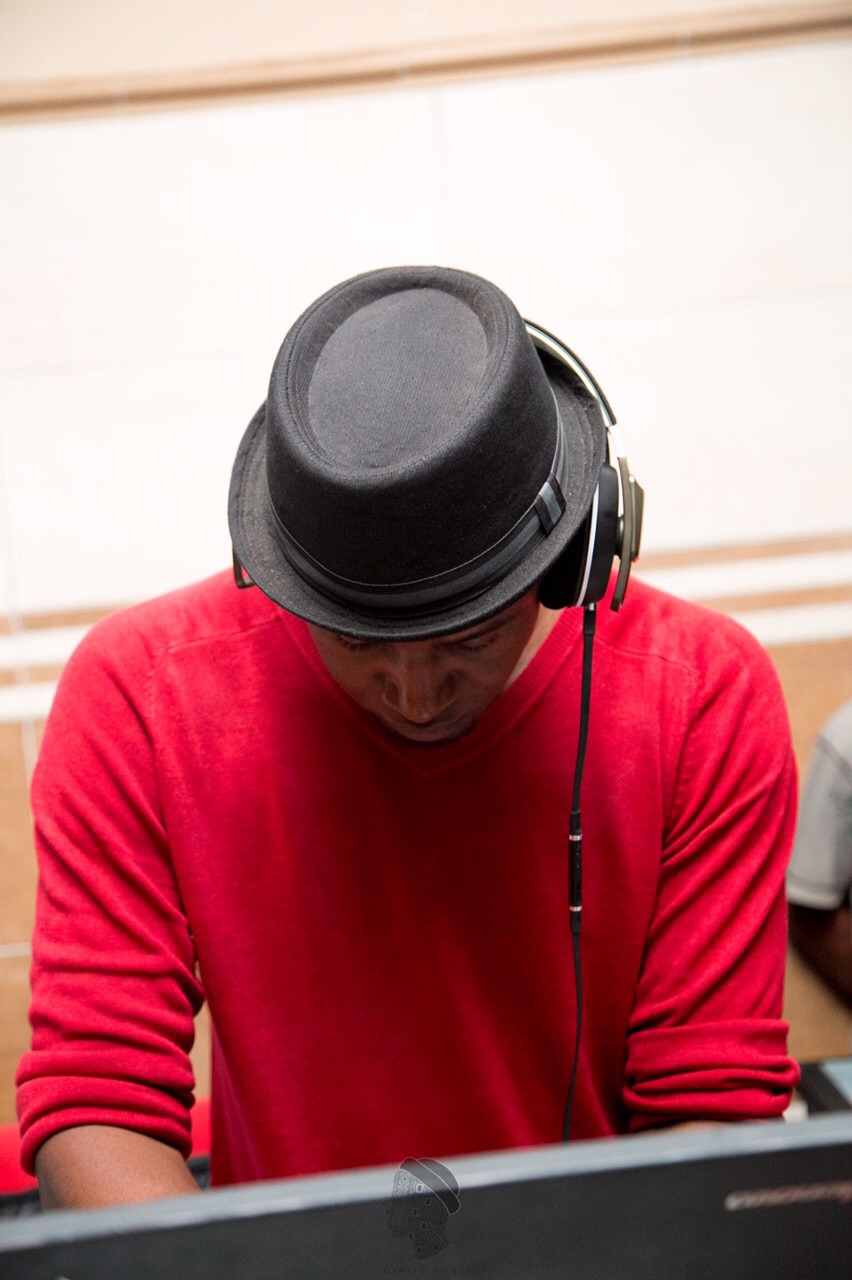
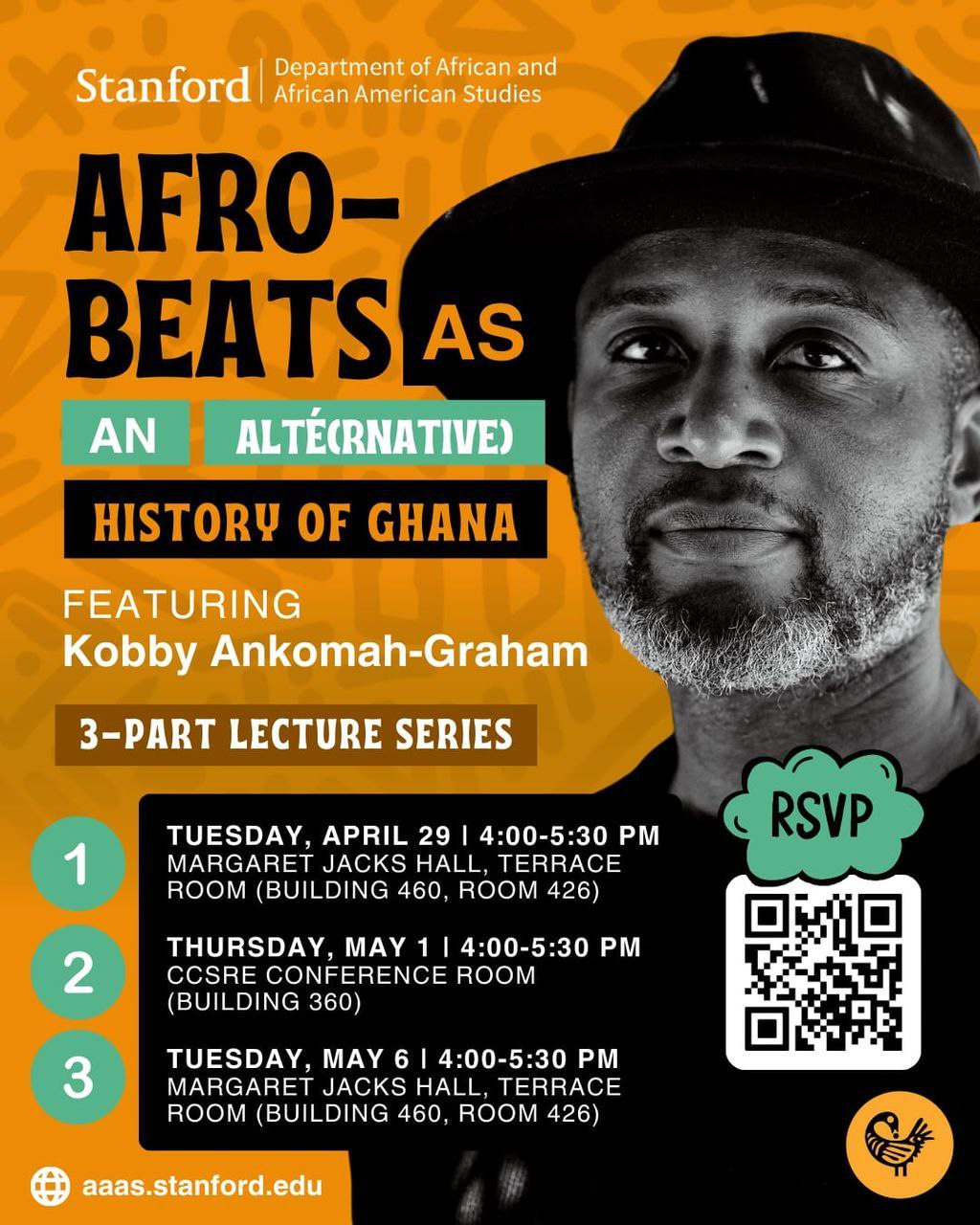
I recently returned from a trip to Stanford University, where I’d been invited to deliver a lecture series on a topic of my choice. Unsurprisingly to anyone who knows me, I chose to tell the story of Ghana through our music: something I will repeat in Accra later this month (details at the end of the post).
In a course I’ve been teaching at CIEE Ghana, I’ve been exploring our political history – from the First Republic to the Fourth – through the shifting sounds of highlife and its many offspring: palm wine, afrobeats, alté, asakaa, and more. Music is an archive: slice it open and it will tell you more about society than you might expect.
My journey to Stanford began last year, when Professor Ato Quayson visited Accra with a group of students and I was invited to teach a class. We’d crossed paths before, but this was the first time the Professor would sit in one of my classes:
I was nervous.
I ended up presenting a summarized version of my highlife and politics class, and it went so well that Professor Quayson insisted I come to talk at Stanford. I thought he was joking until I got home to a flurry of emails from his team.
Life, as they say, comes at you fast.
America on ICE
A few months later, I landed in California: my first time on the American West Coast.
To be honest, I was hesitant about going to the United States at all. The stories I’ve been hearing of students and academics being arrested and detained by US authorities for holding dissenting views have been alarming.
My politics are no secret. I’m an African with ancestors who died resisting colonialism, and I teach (and post) about the kinds of things the current US administration is in denial over. There’s a reason African leaders – from Nkrumah to Mandela and beyond – identified with the struggles of Palestinians, and why Palestine is recognized by 147 of the 193 (75%) UN member states, most of whom are from the Global South:
The parallels between our experiences and histories are impossible to ignore.
Entering the US, I couldn’t shake the feeling that some border official might run my name through some AI-powered social media sweep, and detain me based on stories I’ve shared online. I later heard that another invited speaker had pulled out.
I considered what security options I had – travelling with a burner phone, using the app Signal, memorizing the numbers of friends and lawyers in case I was detained, etc – but I eventually said fuck it (literally), and even submitted my digital details as part of my entry application, deciding to leave everything in the hands of the gods.
In the end, I faced no issues. Immigration at San Francisco was straightforward. They asked why I was visiting and how long I’d be staying.
That was it.
That it went smoothly for me doesn’t undo my unease around the stories emerging from US campuses. I am not surprised to learn that American tourism has taken a hit: sometimes a place needs to feel the absence of people it resents to reckon with what it is becoming.
California, Concerts, & Jet Lag
My flight was smooth, but the jet lag that followed was not. Stanford is seven hours behind Accra, and my body couldn’t quite work out when it was meant to sleep or wake. Still, the sun came out to welcome me. It got so warm that I even caught a mosquito in my room on my final day. The ancestors were clearly with me, and I needed them to be: my anxiety has been working overtime lately, sending me into shame spirals that have gotten in the way of a lot of work I have on my plate.
The Department of African and African-American Studies (DAAAS) were incredibly generous hosts, and this helped. They kept me busy with an itinerary that saw me dine with inspiring academics, catch a free concert by one of my favourite rappers (Vince Staples), and feel consistently supported.
Highlife: Ghana’s Autobiography
I decided to structure the lectures like a song with three movements: past, present, and future.
The past explored palm wine, independence-era highlife, Ghana funk (and its ties to Fela Kuti’s Afrobeat), and boggar highlife. These weren’t just musical styles: they were the soundtrack to our postcolonial dreams; sonic responses to the hopes and heartbreaks of independence, military rule, and diaspora.
The present tackled hiplife, azonto, and the recent rise of Afrobeats, all against the backdrop of Ghana’s democratisation and digital age.
The future turned toward Kumasi’s asakaa sound, and how it is linked to shifts in Ghana’s global diaspora. It also looked at our increasingly queer-friendly alté(rnative) scenes, and our growing DJ-led rave culture.
All these sounds expand the boundaries of what Ghanaian music is, and – importantly – who it is for.
How It Went
Each session was a vibe. I was a little worried, as there were competing events, but attendance grew with each of the three lectures, just as I had planned: I know I’m a good teacher, and I knew word of mouth would do what it does.
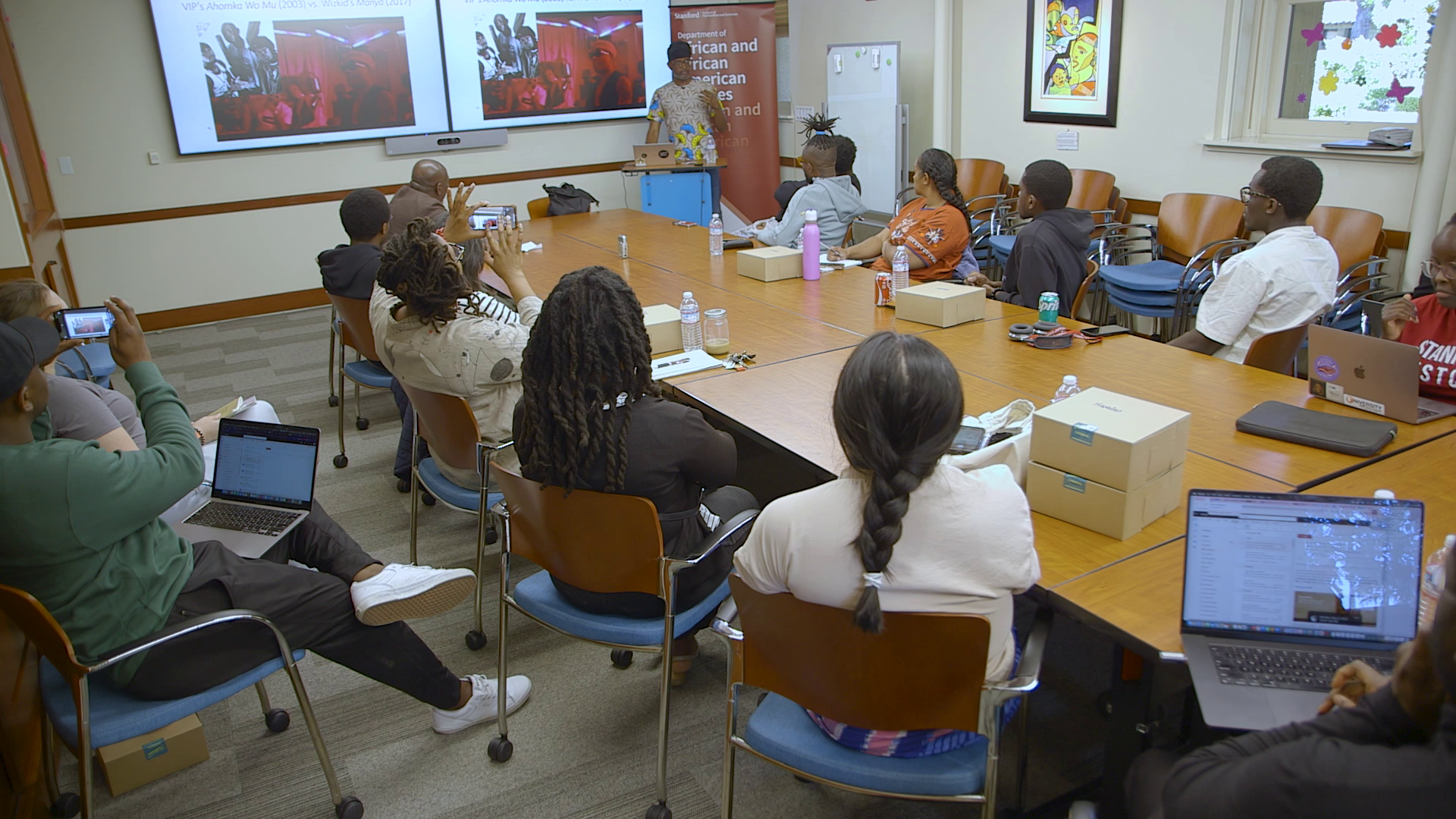
We stomped out polyrhythms and watched music videos together, and the questions – from faculty, staff, and students alike – were sharp, and full of warmth and curiosity.
Two students from my Ashesi days (people still don’t seem to know I left in 2018) even showed up: one for the first session, the other for the last.
I was very moved.
Polyrhythms & Reflections
More than anything, the experience gave me space to reflect. It reignited my commitment to finishing my PhD: a project I’ve struggled to balance alongside poor mental health (I’ve lost my brother and my father since 2020), and the responsibilities of adulting, even with a loving community around me.
The trip nudged me to reconsider academic writing and getting papers published: something I’ve long found intimidating. Academic writing does not come as easily to me as the kind of writing I do for blogs, newsletters, memoirs, and magazines.
Professor Quayson offered what might be the coolest professional advice I’ve ever received. “Be polyrhythmic,” he said, referencing something I had said in my first lecture about early Ghanaian music. “Don’t wait to finish one thing before starting another. Write the PhD – sure – but write your lectures up too.”
He was as generous with (high) praise as he was with advice. I think I’m done doubting my academic self.
Gratitude… & an Accra Surprise
I’m deeply grateful to the entire DAAAS team – especially Sandra, Cindy, and Sasha – for making me feel so at home. To Akwasi Abrefah, A-lan Holt (of Stanford’s Institute for Diversity in the Arts), and Abdulbasit Kassim for their time and thoughtful conversation. To ‘the Revs’ – Reverend Jonathan and Reverend Dr. Sakena Young-Scaggs for Afrofuturist conversation, and connecting the dots between jambalaya and jollof. To my dear old friend Jennifer Cendana Armas, who flew in from New York to show me the lay of the land (and make sure I made better food choices). And, of course, to Professor Ato Quayson, for everything.
I have much to be grateful for.
PS: before anyone asks – yes, I will be delivering a version of the lecture in Accra.
The venue has already been booked and the date will be announced very soon.
If you want details ahead of anyone else, sign up to my Substack and keep an eye on your email inbox.

